Monolithic vs SOA vs Microservices Architecture: Choosing the Right Approach for a Fintech Startup
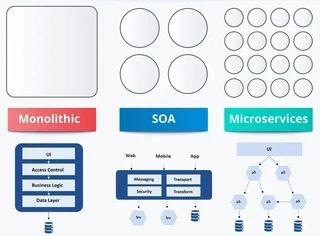
In today’s fast-paced digital environment, fintech startups face the challenge of delivering reliable, secure, and highly available services to customers who expect frictionless financial transactions. One of the most critical decisions for a growing fintech company is selecting the right software architecture. Three popular architectural patterns dominate the discussion — Monolithic, Service-Oriented Architecture (SOA), and Microservices.
This article explores the key characteristics, benefits, and trade-offs of each architecture style and offers insights into how fintech startups can decide which approach is best for their product and organizational needs. Throughout, we’ll use approximate numerical examples to illustrate real-world scenarios.
1. Monolithic Architecture
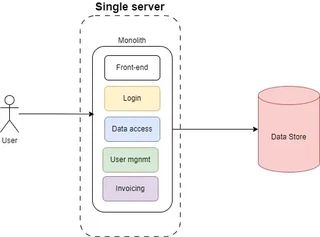
A Monolithic Architecture is one in which all components of a software application — user interface, business logic, and data access — are combined into a single, unified codebase.
Key Characteristics
- Single Codebase The entire application is built and deployed as one large unit. As an example, a small fintech MVP might have 5,000–20,000 lines of code in a single repository.
- Centralized Data Management Since all services share the same database, data access and schemas are often straightforward to manage.
- Tight Coupling Components are interdependent; a change in one module (e.g., a payment processing function) can affect the rest of the system.
Benefits for a Fintech Startup
1. Simplicity and Ease of Development
- Building and deploying an MVP can be faster because everything resides in one repository.
- A small team (2–3 developers) can more easily coordinate their work within a single monolith.
2. Reduced Operational Overhead
- A single build, testing, and deployment pipeline is easier to maintain.
- Fewer moving parts often translate into lower initial infrastructure costs — running on a single cloud VM or a single Docker container for early pilots.
3. Easier Debugging
- Centralized logging and error handling make it straightforward to pinpoint issues, especially when the overall transaction volume is still modest.
Drawbacks
1. Limited Scalability
- Scaling the entire application rather than specific components can lead to resource inefficiency. For instance, if your user authentication module is the bottleneck, you still have to redeploy the entire app to scale.
- Once transaction volumes grow to hundreds of thousands of daily operations, a monolith can become unwieldy.
2. Slower Development Cycle
- Builds and deployments become slower as the codebase grows into 100,000+ lines or more.
- A single bug in one area can delay releases for the entire platform.
3. Rigid Technology Choices
- Adopting new frameworks or tech stacks is an all-or-nothing proposition, complicating upgrades and innovation at scale.
When to Consider Monolithic
- Early-Stage MVPs: If you’re launching a small pilot with < 5,000 users, a monolithic architecture can help you quickly validate your core business model.
- Small Teams (2–3 Developers): For startups with limited engineering resources, a single codebase can be easier to manage initially.
2. Service-Oriented Architecture (SOA)
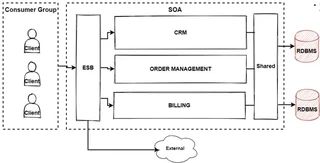
Service-Oriented Architecture (SOA) is a style where distinct services — each representing a particular business function — communicate through a centralized messaging or streaming system. While traditional SOA often relies on an Enterprise Service Bus (ESB) for orchestration, many modern implementations use Apache Kafka or similar platforms as the backbone for service communication.
Key Characteristics of SOA
- Shared Communication Layer Services interact via an event streaming or messaging platform like Apache Kafka, which can handle thousands to tens of thousands of messages per second with proper configuration.
- Loose Coupling Services are developed and managed independently, with Kafka facilitating communication and orchestration.
- Functional Decomposition Each service focuses on a specific business function (e.g., KYC, transaction processing, fraud detection).
SOA Benefits for a Fintech Startup
1. Improved Modularity
- Each service can be developed, deployed, and maintained independently.
- Teams can specialize in specific business functions without disrupting other parts of the application.
2. Scalability and Flexibility
- Services can be scaled individually based on demand. For example, if your payment service needs to handle 50,000 daily transactions, you can allocate more compute resources specifically for it.
- Apache Kafka enables efficient handling of real-time data streams, crucial for fintech applications processing 5,000+ events/second during peak times.
3. Reusability
- Common services (e.g., payment gateways, notification modules) can be reused across different channels or products.
- Standard interfaces (e.g., REST, gRPC) and Kafka topics can be consistently adopted across the organization.
SOA Drawbacks
1. Complex Infrastructure
- Managing a robust Kafka cluster requires careful setup, monitoring, and ongoing maintenance. A typical production-grade cluster might consist of 3–5 brokers to start, scaling to 10+ for higher throughput.
- Ensuring reliable message delivery and data consistency across services can be complex, especially as you approach 10,000+ messages/second throughput.
2. Potential Bottlenecks
- Under heavy loads with average transactions more than 10,000 messages per second, Kafka brokers need scaling and partition management to maintain efficient throughput.
- Poorly designed partitions or inadequate hardware can create a central bottleneck, affecting all services.
3. Higher Operational Cost
- Operating multiple services alongside a Kafka environment can be more expensive than a monolith, especially for smaller startups with tight budgets.
- Additional layers for monitoring, security, and management are necessary.
When to Consider SOA
- Growing Teams and Evolving Product Needs: When your startup moves beyond 5–10 developers and needs to break down a monolith into manageable services, SOA can smooth the transition.
- Integration with External Systems: Kafka’s ability to handle real-time event streams is invaluable when integrating multiple external services (e.g., payment networks, third-party fraud detection).
3. Microservices Architecture
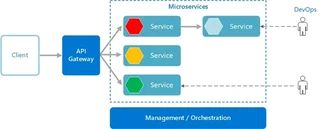
Microservices Architecture takes service orientation further by decomposing an application into very small, autonomous services, each focusing on a single business capability. They communicate over lightweight protocols — often HTTP/REST, gRPC, or messaging queues — potentially leveraging Kafka for streaming.
Key Characteristics of Microservices
- Single Responsibility Each microservice handles one distinct function (e.g., risk scoring, user authentication). Services might only be 2,000–3,000 lines of code each.
- Decentralized Data Management Each microservice may maintain its own database, reducing shared dependencies and limiting the blast radius for failures.
- Independent Deployment Each service can be built, tested, and deployed independently of others, ideal for teams practicing continuous delivery (CD) with multiple deployments per day.
Microservices Benefits for a Fintech Startup
1. High Scalability and Resilience
- Only the services experiencing high load need to be scaled, making the system more resource-efficient. For instance, a fraud detection service can scale up if it needs to handle 20,000 requests/second while user management remains at a lower throughput.
- Failures are isolated; one microservice going down doesn’t necessarily compromise the entire platform.
2. Faster Time-to-Market
- Independent service lifecycles allow for rapid iteration and deployment. A microservice can go from code to production in minutes, assuming strong CI/CD pipelines.
- Smaller codebases per service mean fewer merge conflicts and faster testing cycles.
3. Technology Diversity
- Each microservice can use the tech stack best suited for its needs (e.g., Python for machine learning, Go for high-performance services).
- Encourages experimentation with emerging frameworks (e.g., Rust, Elixir) for specialized tasks.
4. Enhanced Compliance and Security
- Sensitive data (e.g., cardholder details) can be confined to a single microservice that’s tightly locked down and audited.
- Microservices reduce the attack surface for each individual service, aiding in meeting compliance requirements like PCI DSS or ISO 27001.
Microservices Drawbacks
1. Increased Complexity
- Managing dozens (or hundreds) of microservices is non-trivial, requiring advanced DevOps skills and robust observability. A large-scale setup might involve 50+ microservices each with its own pipeline.
- Network latency and distributed transaction handling can introduce new failure modes.
2. Higher Infrastructure Costs
- Each microservice demands its own runtime environment and often its own database. With 10+ microservices in production, container orchestration (e.g., Kubernetes) and multiple databases can drive up monthly bills from $1,000** to **$5,000+.
- Requires sophisticated monitoring and logging (e.g., Prometheus + Grafana or DataDog), which can also add cost.
3. Steep Learning Curve
- Development teams must be well-versed in distributed systems, containerization, orchestration, and effective communication patterns.
- Aligning multiple teams (e.g., 10+ squads) on best practices, versioning, and standards requires strong leadership and organizational discipline.
When to Consider Microservices
- Rapid Growth and High Transaction Volumes: If your platform expects >1 million transactions/day and needs to serve 10,000+ concurrent users, microservices can handle surging traffic while maintaining performance.
- Complex Compliance Requirements: Auditing, logging, and isolating data at the service level can streamline compliance processes, essential in finance.
- Mature Engineering and DevOps Culture: If you have (or plan to build) advanced DevOps capabilities, microservices offer unparalleled agility with minimal downtime.
4. Choosing the Right Architecture for a Fintech Startup
Selecting between monolithic, SOA (with Apache Kafka), and microservices depends on factors such as current stage, team size, technological maturity, and long-term vision. Below are a few scenarios to guide your decision:
1. Early-Stage Fintech MVP
- Monolithic architecture often works best when you’re validating your core business model with <5,000 daily active users and a small codebase. It’s a quick way to market with minimal complexity.
2. Scaling and Integration Needs
- As you grow from 2–3 developers to 10+, you may need to break down your monolith. An SOA using Kafka can help you manage real-time data pipelines, facilitate new feature rollouts, and integrate with external services.
3. Complex, High-Volume Operations
- Microservices provide the agility and resilience needed for fintech platforms that handle tens of thousands of transactions per second at peak. Each service can be scaled independently, improving resource allocation and minimizing downtime.
4. Regulatory Compliance
- SOA and Microservices can isolate sensitive data, providing more granular control over compliance and security. Microservices, in particular, offer fine-grained isolation that simplifies audits for large-scale fintech companies operating in multiple regions.
5. Best Practices and Recommendations
Regardless of the architecture you choose, consider the following best practices to maximize success:
1. Embrace DevOps and Automation
- Streamline builds, deployments, and monitoring. Leverage CI/CD pipelines (e.g., GitHub Actions, Jenkins) and Infrastructure as Code (e.g., Terraform, AWS CloudFormation).
- For example, aim for multiple deployments per week or even daily if your team’s size and process maturity allow.
2. Prioritize Security
- For fintech, robust encryption, secure coding practices, and role-based access controls (RBAC) are essential to handle potentially 100,000+ user records.
- Regular penetration testing and vulnerability scanning can help maintain trust.
3. Focus on Observability
- Implement comprehensive logging, metrics, and distributed tracing. Tools like Prometheus, Grafana, and OpenTelemetry can handle thousands of metrics per second in microservices environments.
- Quickly identifying root causes can reduce downtime costs.
4. Design for Failure and Resilience
- Use patterns like retries, circuit breakers, and timeouts to handle transient errors. For instance, a “circuit breaker” threshold might be triggered when over 100 failed requests occur within a 30-second window.
- Plan redundancy and consider multi-region deployments for high availability to ensure 99.99% uptime SLAs.
5. Iterate Gradually
- If you plan to move from a monolith to SOA or microservices, do so in stages. Start by splitting off a high-traffic or complex module (e.g., payment processing).
- Measure improvements in lead time, deployment frequency, and error rates to justify further decomposition.
Conclusion
No single architectural style is a one-size-fits-all solution for fintech startups. Monolithic architectures offer a quick path to market for early-stage companies, SOA (using Kafka or other event streaming platforms) provides modularity and smoother integrations as you grow, and Microservices deliver ultimate scalability and agility for complex, high-volume financial systems.
Ultimately, the best approach is one that aligns with your business objectives, team expertise, and long-term growth plans. By implementing robust DevOps practices, prioritizing security and compliance, and iterating methodically, you can build a dependable and innovative fintech platform capable of meeting evolving market demands.
